What Kind of Discomfort Do You Want to Sustain?
The Danger of When Salty Lemonade Becomes the Norm
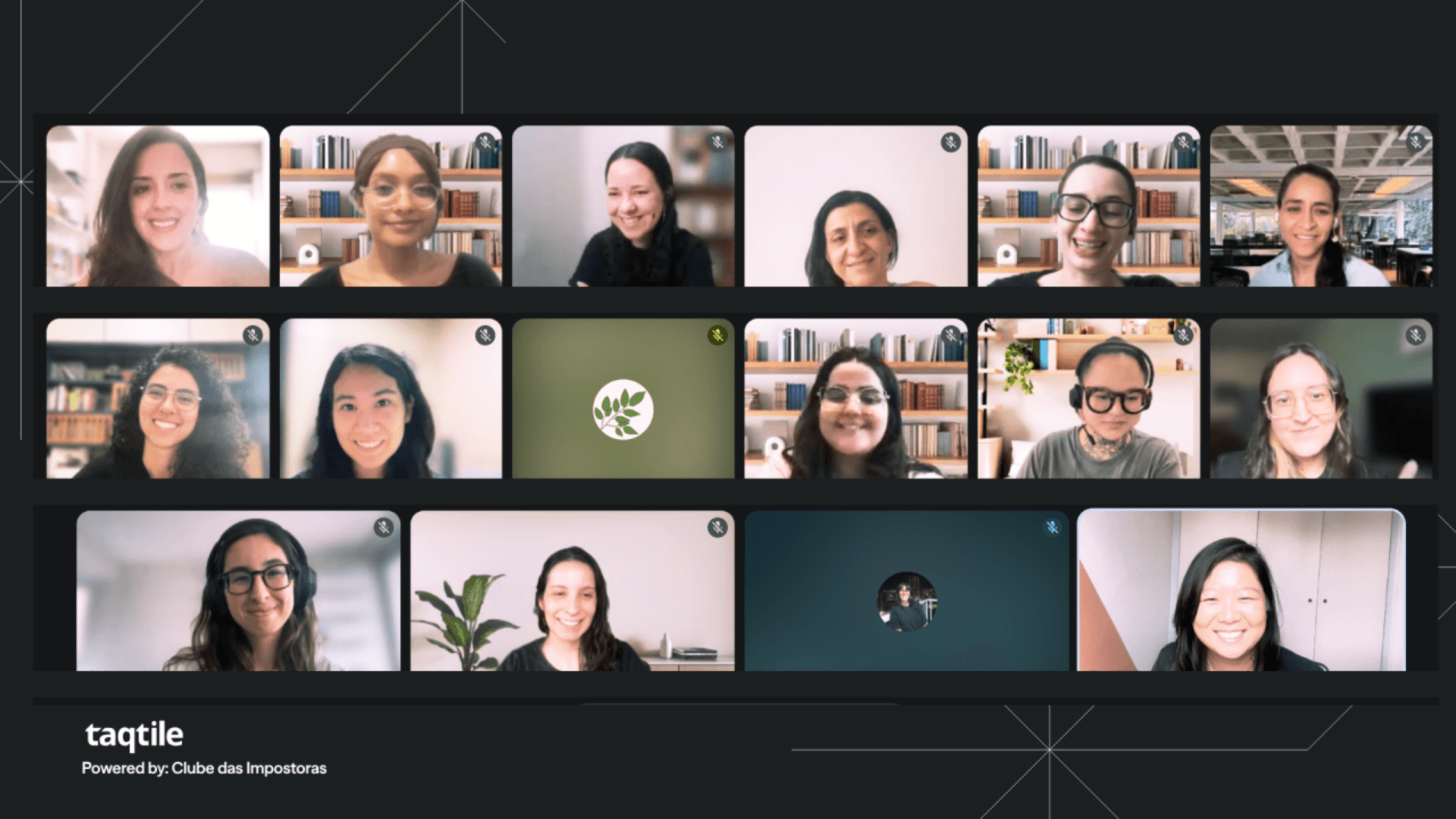
Screenshot from the video call of the online training 'Women in Command: what they never told you about reaching the top', held at Taqtile.
Have you ever sipped salty lemonade and not even been able to name the taste? Sometimes that happens — when salty lemonade is the only thing you've ever known.
Imagine a child being handed a glass of lemonade. She brings it to her lips, and the liquid has salt where sugar should be. The boys spit it out, make faces, say it's terrible. The girls hesitate. They smile. Some take another sip. When asked if it's good, they say yes — or say nothing at all.
This is a real social experiment, and it was the starting point for the meeting I organized at Taqtile last Wednesday with Bianca Lima and Tuanny Martins. We invited Jéssica Paraguassu, a specialist in gender and technology, to lead the training "Women in Command: What They Never Told You About Making It to the Top."
The psychologist Laura Foschiera from @lugardemulher.cc (the Instagram account where the video of the experiment was posted — shared with our group by Taqtiler Erica Urushibata) identifies a different focus in the girls: not on the object, but on the relationship with the person who served the drink. And so they would avoid saying anything that might make the other person uncomfortable.
Do you recognize yourself in this? How many times has something similar happened — like when you suggest an approach in a meeting. Silence. Fifteen minutes later, a male colleague repeats the same idea in different words. "Excellent, let's go with that." You smile. You say nothing.
I couldn't help thinking back to the meeting we had in February with Isadora Fraga, one of the voices that Clube das Impostoras (Impostors' Club) brought in to speak about leadership and career trajectories. She shared an insight that stayed with me: the importance of always pausing to name the flavor of discomfort before reacting. Not just feeling that something is wrong, but recognizing what. It was this process of naming, she said, that had already saved her from having her limits crossed again.
Sometimes surprise paralyzes us, and we don't even understand what just happened.
It's a Structural and Collective Reality, Not an Individual Problem
The difficulty of understanding what flavor the lemonade of discomfort actually has — and especially of naming it out loud — is not a personality trait. It is a curriculum that many of us completed since childhood, often taught by the very people who want what's best for us.
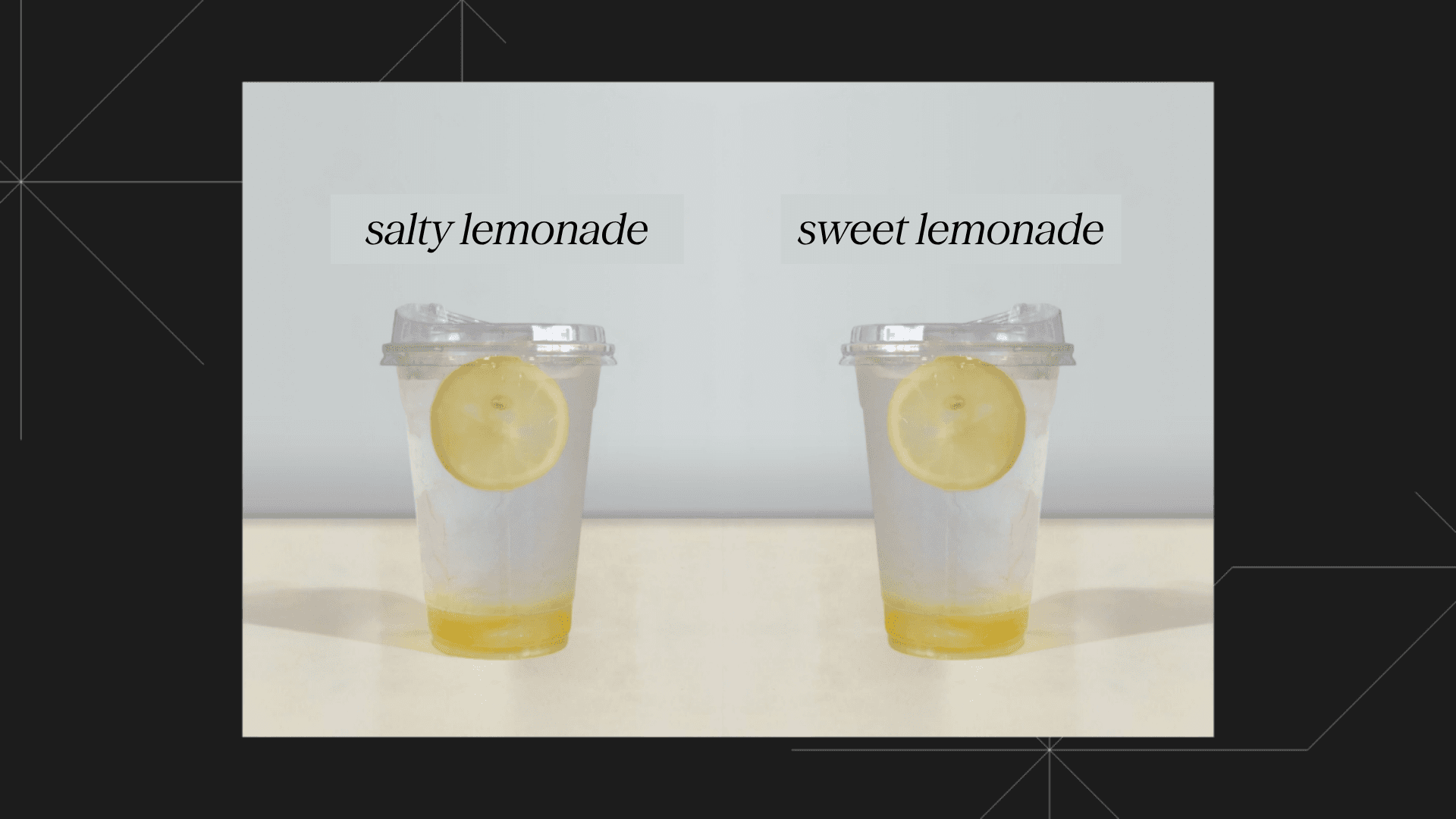
The behaviors that sabotage our careers today were taught in childhood. Many of us were raised to believe that, because we are women, we must be cautious and know how to care — but care for others. That later became a greater difficulty in setting boundaries.
Many women also grow up constantly hearing "sit like a lady," "chew with your mouth closed," corrected over and over with silent instructions to be perfect.
This ongoing pressure creates space for a sense of inadequacy to take up so much room inside us that it ends up bringing exhaustion along with it.
In an already classic study by Barbara Morrongiello (University of Guelph), researchers observed parents at playgrounds with their own three-year-old children. The pattern repeated itself:
For girls: "Careful," "Don't do that, it's dangerous." If the girl insisted, an adult would step in to help.
For boys: encouragement despite fear, with instructions on how to do it themselves.
These differences between what it means to be a man and what it means to be a woman in adult life take on much larger proportions if nothing is done to break what has become common sense. And this is very real in Brazilian society. Anaterra Oliveira addresses this reality in some of her Instagram content at @anaterra.oli, including the video "What do you do when you get home from work?".
And it was Gabriela Yumi Marques who brought to our meeting the TED Talk by firefighter Caroline Paul, "To raise brave girls, encourage adventure," which goes deeper into exactly this point. The message the girl internalizes is clear: you are fragile, you need help, you shouldn't take risks. And that message migrates to adult life as hesitation to speak up, conflict avoidance to remain well-liked, and chronic doubt in one's own decisions.
And this is where the problem becomes a trap: the job market punishes exactly the behavior we were taught to have.
In a classic study on gender perception, researchers presented the same executive profile to two groups, changing only the name: Howard for one group, Heidi for the other. Howard was described as competent and someone people would want to work with. Heidi, with the exact same background, was seen as aggressive and difficult.
What way out exists in this arena — this field where we are held accountable and punished at the same time for the same behaviors, viewed through such different lenses?
The Discomfort Doesn't Go Away
What arena are we actually talking about? It is the arena we were placed in before we even knew what it was to be in it — when someone looked at a baby and said "it's a girl," and from that moment on, you were handed a role to play, with the script arriving line by line, with every criticism that became a new instruction.
Brené Brown, in The Gifts of Imperfection, speaks of this arena through an image Theodore Roosevelt used over a hundred years ago: what matters is not who criticizes from the outside, but who is in there, with a dirty face, stumbling and trying again. Brené reframes that image to speak of something Roosevelt probably never considered: the courage to show up without molding yourself to the critics. The courage to be vulnerable in public and remain authentic.
For women, that courage is both demanded and punished at the same time. Show up too much, you're "aggressive." Show up too little, you're "invisible." Make a mistake and "she wasn't ready." Get it right and "she just got lucky" — and sometimes those are narratives we tell ourselves.
It is exactly this impossible-to-satisfy list of expectations that Taís Araujo and Paolla Oliveira gave voice to in the promotional video for the program Falas Femininas, briefly laying out the contradictions that being a woman in Brazil still means carrying.
What Discomfort Do You Want to Sustain?
So perhaps the most strategic decision we can make is to recognize the flavors of the discomforts we experience and choose the ones we prefer to sustain.
There is no path without discomfort. The discomfort of continuing to swallow salty lemonade in silence carries a weight. And the discomfort of naming the flavor, of showing up, of failing in public, of asking for a limit before it is crossed — that carries another. The question is not how to avoid discomfort. It is which soundtrack you want playing while you're in the arena.
Because discomfort is the soundtrack of the change we seek — words from Dominic Barter (a conflict mediation specialist) remembered by Elisama Santos (author of Conversas Corajosas) in one of her talks.
When the Collective Is Structure, Not Comfort
And yet, sustaining discomfort isn't easy, which is why collective spaces like the Clube das Impostoras community we built are so important. Our mission:
To help the women of Taqtile recognize their own qualities and not walk alone (unless by choice) — so that women increase their influence in the company and are present where decisions are made and where opportunities exist.
There is a difference between a space where you go to vent and a space that gives you back your own perception of discomfort and provides tools.
The first brings relief. The second brings transformation.
That is the bet we have built at Taqtile: an infrastructure for people to grow together, not just individually.
Clube das Impostoras is more than a support network for women and allies within the company and our technology sector. It has a co-created mission and vision, structured meetings, talks, readings, and collective mentorships. It is infrastructure — the kind of space that makes possible what the individual, alone, often cannot: naming the flavors of the salty lemonades, choosing discomfort with more precision from there, and supporting each other in finding the soundtrack for each person's change.
On April 8th, 15 of Taqtile's 16 women were in the room. Not because they were summoned, but because they had the courage to be subversive. On a workday, with a full calendar and the pressure of everything that always needs to be done, they chose to put the oxygen mask on themselves first.
The survey we ran after the April 8th meeting reveals something that the Clube das Impostoras structure was designed to provide: of the 11 participants who responded, the most valued factor was not the content or the speaker — it was the safe space (64% of responses). The average sense of being welcomed among responses: 4.7 out of 5. What transforms are safe environments for uncomfortable subjects, and that is not built without intention, and not overnight.
After the meeting, the message I wanted to send to the group was to acknowledge each person's effort and say:
"Grateful for energizing this collective space and giving ourselves a little more breath to keep going in the arena."
Renewed energy to keep going in the arena. Not to leave it.
And you — what collective gave you back your flavor?
If you identified with this, follow content about leadership, culture, and technology on Taqtile's LinkedIn — and follow me here too.
My gratitude to Bianca Lima and Tuanny Martins for co-organizing the meeting, to Jéssica Paraguassu for the training, and to all the women of Clube das Impostoras at Taqtile for sustaining this space together: Ysabella Andrade Aline Vieira Ana Luzia Maranini Tuanny Martins Carolina Gómez Pérez Carolina Campos Leticia Fonseca Su Yin Yu Bianca Lima Erica Urushibata Nix Lopes Gabriela Yumi Marques Valéria Cunha Julia Ribeiro N. Naomi Sato
Reading recommendations from Jéssica Paraguassu:
The Courage to Be Disliked, by Ichiro Kishimi and Fumitake Koga